
THCa decarboxylation is the chemical process that converts tetrahydrocannabinolic acid (THCa), a non-intoxicating compound found in raw cannabis, into THC, the psychoactive component responsible for the plant’s well-known effects. This transformation happens when THCa is exposed to heat, whether through smoking, vaping, cooking, or simply aging over time. The “A” in THCa stands for an acid group that breaks away during heating, fundamentally changing how the compound interacts with your body’s endocannabinoid system.
For people managing chronic conditions like diabetes, understanding this conversion matters because many discussions around medical cannabis or wellness products revolve around THCa versus THC. Using a top THCA vape before heating delivers a completely different experience than heated products. THCa won’t produce intoxication in its natural state, but once decarboxylated into THC, it binds to CB1 receptors in the brain and creates psychoactive effects.
This article explains exactly how decarboxylation works at a molecular level, what factors influence the conversion speed and efficiency, and why temperature control matters for anyone preparing edibles or using cannabis therapeutically. You’ll learn the practical differences between consuming raw THCa and decarboxylated THC, plus how this knowledge applies to real-world decisions about cannabis products. Our goal is to provide clear, science-based information that helps you make informed choices if cannabinoid therapy becomes part of your health conversations.
What THCa Means
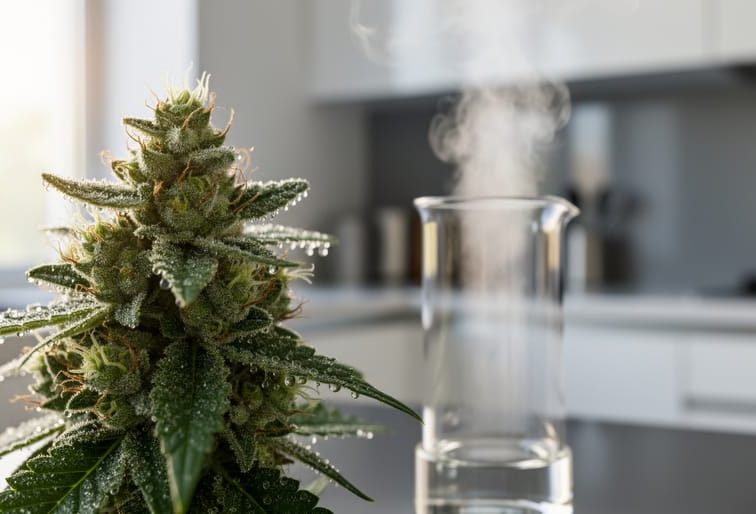
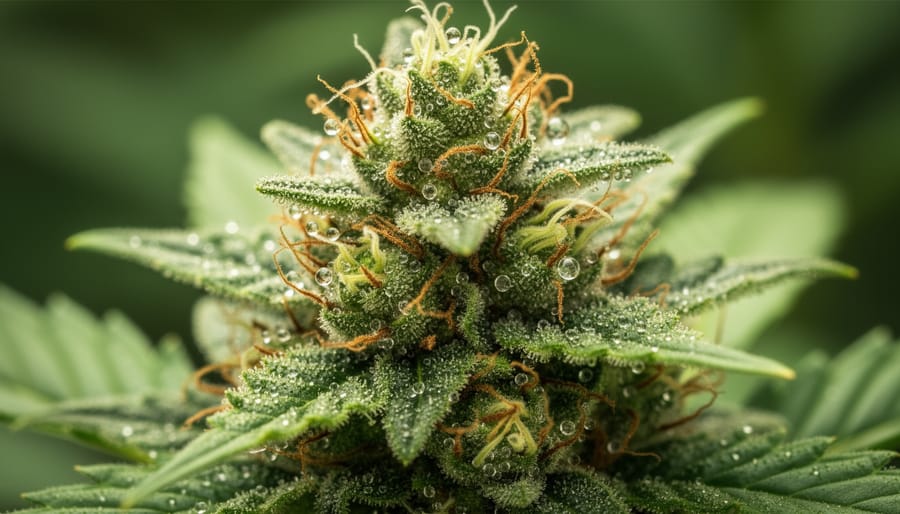
THCa, or tetrahydrocannabinolic acid, is the raw, non-intoxicating compound naturally produced in living cannabis plants. Think of it as the plant’s original form, before any heat or processing occurs. When cannabis grows, it synthesizes THCa in its trichomes (the tiny, resin-filled glands on flowers and leaves), not the THC that creates intoxication.
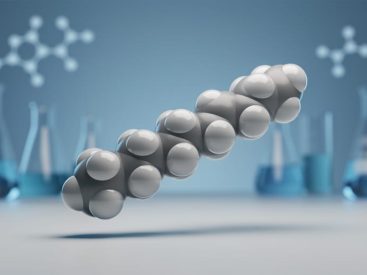
The crucial difference lies in chemistry. THCa contains an extra carboxyl group, a cluster of carbon, hydrogen, and oxygen atoms, attached to its molecular structure. This seemingly small addition fundamentally changes how the compound interacts with your body. Because of this extra group, THCa cannot easily bind to the cannabinoid receptors in your brain and nervous system that produce psychoactive effects.
- THCa (tetrahydrocannabinolic acid)
- The acidic, non-intoxicating cannabinoid found naturally in raw cannabis plants before heat exposure.
- THC (tetrahydrocannabinol)
- The psychoactive compound formed when THCa loses its carboxyl group through heat or time, responsible for cannabis intoxication.
- Cannabinoid
- A class of chemical compounds that interact with receptors in the human endocannabinoid system, found in cannabis plants and produced naturally in the body.
- Precursor compound
- A chemical substance that converts into another, more active compound through a transformation process like decarboxylation.
In practical terms, eating raw cannabis leaves or flowers will not produce a high because the THCa remains in its original, non-psychoactive form. The compound exists in this state to serve the plant’s biological functions, not to create intoxication in humans. Only when THCa undergoes a chemical change, losing that carboxyl group, does it transform into THC and gain the ability to produce psychoactive effects. Understanding this distinction helps clarify why the preparation method matters so much in cannabis products.
How Decarboxylation Works
Temperature and Time Factors
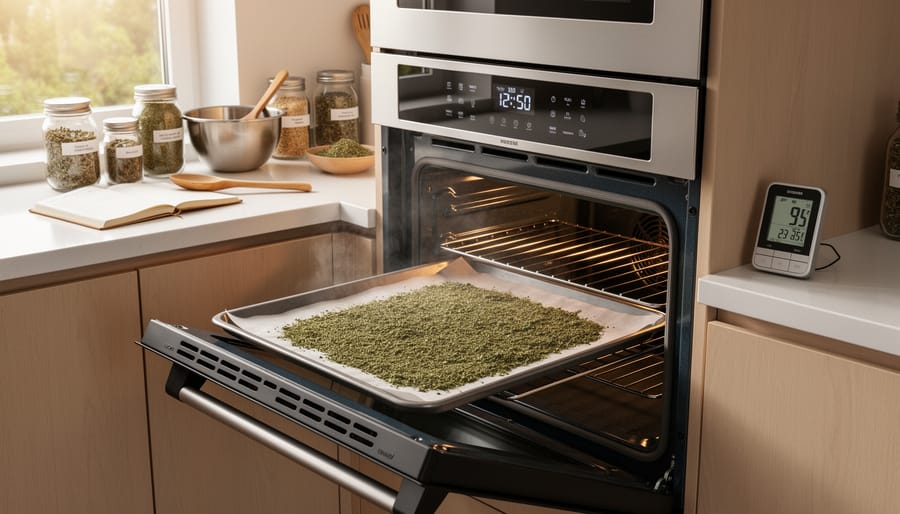
Decarboxylation occurs most efficiently within a specific temperature window. The ideal range sits between 220°F and 250°F (approximately 105°C to 120°C). Within this zone, THCa molecules reliably release their carboxyl group and convert to THC without degrading the compound itself.
Time matters as much as temperature. At 240°F, nearly complete decarboxylation happens in about 40 minutes. Lower temperatures require longer exposure, around 200°F might need 90 minutes or more. Higher temperatures speed the process but carry risks: above 300°F, THC begins breaking down into cannabinol (CBN), which produces different, often sedative effects.
Several variables influence conversion rates. Moisture content in plant material slows decarboxylation because water must evaporate first. Smaller, finely ground cannabis pieces convert faster than larger buds due to increased surface area. The starting THCa concentration also plays a role, fresh cannabis converts differently than aged material where some natural decarboxylation has already occurred.
Oven variations introduce another factor. Most home ovens fluctuate by 10-25 degrees, creating hot spots that can over-decarboxylate some material while under-processing the rest. This explains why precise cannabis users often prefer controlled decarboxylation devices for consistent results.
Common Decarboxylation Methods
Decarboxylation occurs through several pathways, some deliberate and others that happen passively over time:
- Smoking/combustion: Direct flame instantly converts THCa to THC as cannabis burns, typically reaching temperatures above 400°F.
- Vaporization: Controlled heating between 315-440°F activates THCa without combustion, though users should be aware of vaping health risks.
- Oven baking for edibles: Low, sustained heat (usually 220-250°F for 30-45 minutes) gradually converts THCa in preparation for cooking.
- Slow natural aging: THCa degrades to THC over months or years when cannabis is stored, though this process is unpredictable and incomplete.
Smoking and vaping represent intentional, rapid decarboxylation methods that activate THCa immediately upon use. Baking for edibles is also intentional, people preparing cannabis-infused foods carefully heat their material first to ensure THC is available for absorption through digestion. Natural aging, by contrast, is incidental; it happens whether you want it to or not as raw plant material sits in storage. The conversion rate varies wildly based on temperature, humidity, and light exposure, making it unreliable for those seeking consistent results.
Forms of Cannabis: THCa vs. THC Content
Cannabis products come in different forms that vary dramatically in their THCa and THC content, and understanding these differences helps you make sense of product labels and choose options aligned with your needs.
Raw cannabis flower contains primarily THCa, not THC. Fresh or dried buds that haven’t been heated retain the plant’s natural acidic cannabinoid profile. Some people juice raw cannabis leaves or add fresh buds to smoothies specifically to access THCa without intoxicating effects. These raw products won’t produce a high because the THCa hasn’t converted to THC.
Heated or processed cannabis products contain mostly THC. When you smoke or vape cannabis flower, the combustion or vaporization instantly decarboxylates the THCa into THC. Similarly, cannabis concentrates like oils, tinctures, and distillates typically undergo heating during extraction, converting THCa to THC before packaging. Edibles like brownies or gummies also contain THC rather than THCa because the baking or infusion process decarboxylates the cannabinoids.
Product labeling should indicate both THCa and THC percentages, though formats vary by region. A raw cannabis flower might show 20% THCa and less than 1% THC, while a vape cartridge might list 80% THC with negligible THCa. Some labels display “total THC,” which combines existing THC with the potential THC from decarboxylated THCa, calculated by multiplying THCa percentage by 0.877 (accounting for molecular weight loss) and adding current THC levels.
If you’re considering cannabis products for any reason, read labels carefully to understand whether you’re getting non-intoxicating THCa or psychoactive THC. The form determines the experience, and knowing what you’re looking at empowers informed choices.
How Cannabis Effects Change After Decarboxylation
Non-Intoxicating THCa Properties
THCa in its raw, non-decarboxylated form does not produce the “high” associated with THC, which has led researchers to explore whether it might offer other potential benefits. Preliminary laboratory studies have examined THCa’s interaction with the body’s systems, particularly focusing on anti-inflammatory and neuroprotective properties.
Early research suggests THCa may influence inflammatory pathways differently than THC, though these studies are primarily conducted in cell cultures or animal models, not human clinical trials. Some laboratory findings indicate possible effects on inflammatory markers, while others have explored how THCa interacts with cellular processes related to neuroprotection.
It’s crucial to understand that this research is in very early stages. What happens in a laboratory setting doesn’t necessarily translate to real-world human health outcomes. Scientists haven’t yet established effective doses, long-term safety profiles, or whether these preliminary observations hold up in rigorous clinical studies.
For people with diabetes or other chronic conditions considering cannabinoid options, it’s especially important not to interpret early research as proven medical benefits. No regulatory body has approved THCa for treating any specific condition. If you’re exploring non-intoxicating cannabinoid options, discuss them with your healthcare provider first, particularly regarding potential interactions with diabetes medications or effects on blood sugar regulation.
THC’s Psychoactive Effects
Once THCa converts to THC through heat, it gains the ability to produce intoxication. This happens because THC binds directly to CB1 cannabinoid receptors concentrated in the brain and central nervous system.
When THC attaches to these receptors, it triggers a cascade of neurological responses. Users typically experience altered sensory perception, colors may appear more vivid, sounds more pronounced, and time can feel like it’s moving differently than usual. Many people report mood changes ranging from euphoria and relaxation to anxiety or paranoia, depending on the dose, individual sensitivity, and setting.
THC also affects short-term memory and coordination. This is why driving or operating machinery while intoxicated is dangerous. The intensity of these effects depends on several factors: how much THC enters your system, your body’s metabolism, prior cannabis exposure, and the consumption method (inhaled THC acts faster than edibles, which take longer to process through digestion).
For people managing diabetes, these psychoactive effects can complicate blood sugar awareness and medication timing. Some users report increased appetite (“the munchies”), which affects carbohydrate intake and glucose management. Always discuss cannabis use with your healthcare provider to understand how it might interact with your diabetes care plan.
Uses and Applications of THCa and Decarboxylation Knowledge
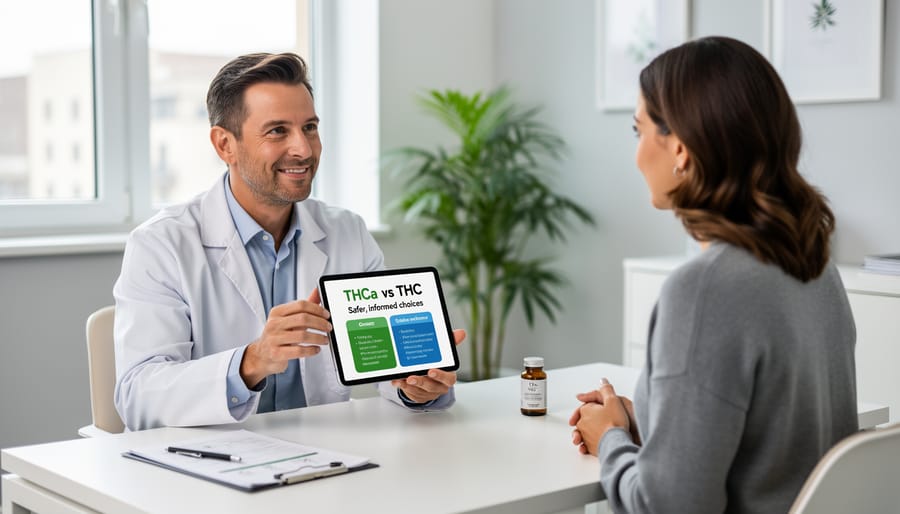
Understanding how decarboxylation works has practical implications for anyone navigating cannabis wellness options, whether they’re exploring medical applications, preparing products at home, or simply trying to understand what they’re consuming.
For people using medical cannabis, knowing about decarboxylation helps explain why the same strain can produce different effects depending on how it’s consumed. Someone seeking symptom relief without intoxication might choose raw cannabis juice or tinctures, while others might prefer the activated THC in vaporized or edible forms. This knowledge supports informed conversations with healthcare providers about treatment goals and product selection.
Understanding decarboxylation proves essential in several scenarios:
- Dosing medical cannabis accurately based on desired THC activation levels
- Preparing homemade edibles with predictable potency by controlling temperature and time
- Selecting between raw products (high THCa) and heated products (high THC) for specific wellness goals
- Having informed healthcare conversations about cannabinoid options and potential medication interactions
For individuals with chronic conditions like diabetes, this knowledge connects to broader wellness exploration. Some people with diabetes investigate cannabinoid options as part of their overall health management, similar to how they might research diabetes wellness basics or complementary approaches. Understanding the difference between THCa and THC helps clarify what different products actually contain and what effects to expect.
Anyone preparing cannabis edibles at home needs decarboxylation knowledge to activate THC properly. Skipping this step or using incorrect temperatures results in weak or ineffective products, while overheating can degrade cannabinoids entirely. This understanding prevents wasted ingredients and ensures more predictable results.
What People with Diabetes Should Know
If you’re exploring cannabis-related wellness information, it’s helpful to understand how THCa decarboxylation connects to diabetes management. Many people with chronic conditions encounter cannabinoid discussions in health forums, research articles, or conversations with others managing similar challenges.
The most important consideration: cannabis products, especially those containing THC, can affect blood glucose levels. Some research suggests THC may influence insulin sensitivity and glucose metabolism, though findings vary. Both THCa and decarboxylated THC products could potentially interact with diabetes medications, creating unpredictable blood sugar fluctuations. If you’re considering any cannabis product, whether raw THCa or heat-activated THC, monitoring your glucose levels closely is essential.
Edibles and blood sugar present particular concerns because they combine cannabinoids with carbohydrates and sugars that directly impact glucose. The delayed absorption of edibles makes timing insulin doses trickier, and the extended effects can complicate overnight glucose management.
Before trying any cannabis product, talk with your healthcare provider. They can assess potential interactions with your current medications, discuss how cannabinoids might affect your ability to manage blood sugar and help you make informed decisions aligned with your treatment plan.
Understanding the chemistry behind THCa decarboxylation empowers you to ask better questions and recognize what different cannabis products actually contain, knowledge that supports safer, more informed choices if you decide this path fits your wellness approach.
Frequently Asked Questions
Can you reverse decarboxylation once THCa becomes THC?
No, decarboxylation is a one-way chemical reaction. Once the carboxyl group is removed and THCa converts to THC, you cannot restore the original molecular structure through any practical means.
Does THCa show up on standard drug tests?
Most standard drug tests screen for THC metabolites, not THCa itself. However, raw cannabis containing THCa may undergo partial decarboxylation during storage or handling, potentially creating enough THC to trigger a positive result. Anyone subject to drug testing should proceed with caution.
How do you preserve THCa in raw cannabis without it converting to THC?
Store raw cannabis in cool, dark, airtight containers away from heat and light. Refrigeration or freezing can slow natural decarboxylation that occurs over time, though some conversion will eventually happen even under ideal conditions.
What’s the best temperature for decarboxylation when making edibles?
Most home cooks use 220-245°F for 30-45 minutes to achieve thorough decarboxylation without degrading THC into less desirable compounds. Lower temperatures take longer but preserve more terpenes and reduce the risk of burning.
These questions reflect common concerns for anyone exploring cannabis products, whether for wellness research or practical applications. Understanding these basics helps you make informed decisions and manage expectations about how different cannabis forms behave. For people with diabetes considering any cannabis-derived products, the drug testing question becomes particularly relevant if you work in a field with screening requirements or take medications that could interact unpredictably with cannabinoids. The preservation question matters if you’re interested in non-intoxicating options that retain THCa’s natural state. Always discuss any cannabis use with your healthcare team, especially when managing chronic conditions that require careful monitoring and medication management.
Understanding THCa decarboxylation empowers you to make informed decisions about cannabis products if you’re exploring wellness options. The fundamental difference is simple: THCa won’t produce intoxication, but once heat transforms it into THC, the effects change completely. This chemical shift affects everything from how a product works in your body to how it might interact with diabetes management.
If you’re considering any cannabis-based approach, especially while managing a chronic condition, talk with your healthcare provider first. They can help you understand potential interactions with your medications, effects on blood sugar, and whether specific products align with your health goals. The research landscape continues to evolve, and what we know about cannabinoids and diabetes is still developing.
You deserve clear, accurate information when making wellness choices. Whether you’re curious about raw cannabis juices, medical cannabis programs, or just trying to understand what friends or family members are using, knowing the science behind decarboxylation helps you navigate these conversations with confidence. Stay informed, ask questions, and always prioritize your health management plan. Your diabetes care team remains your best resource for personalized guidance.