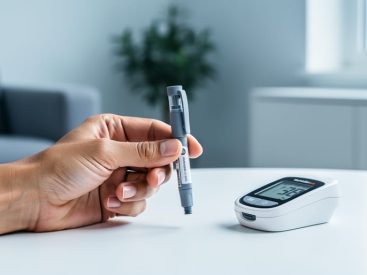
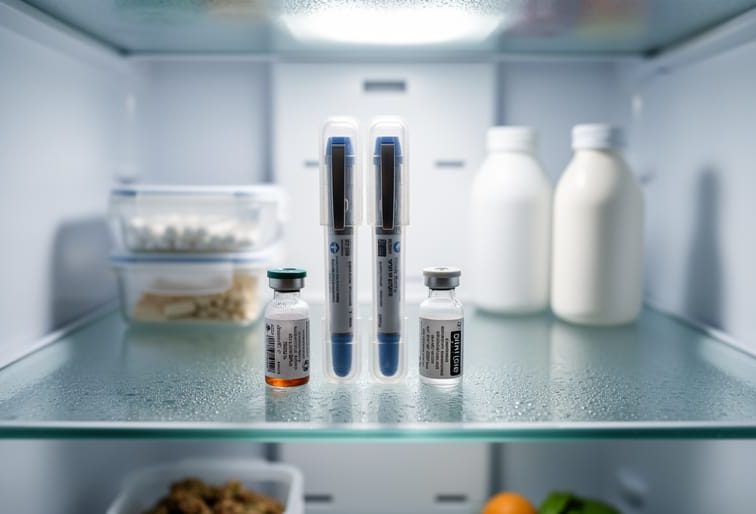

Proper insulin storage is straightforward: keep unopened vials and pens refrigerated between 36°F and 46°F, then store them at room temperature (below 86°F) for up to 28 days once opened. This simple practice protects your medication’s potency and ensures every dose delivers the blood sugar control you depend on.
Temperature extremes are insulin’s biggest enemy. Freezing breaks down the protein structure permanently, while heat above 86°F accelerates degradation and reduces potency sometimes without visible changes. Thousands of people with diabetes have learned this lesson the hard way, discovering ineffective insulin after a hot car trip or accidental freezer storage.
The good news? Managing insulin storage becomes second nature quickly. Whether you’re newly diagnosed, planning your first trip with diabetes supplies, or simply want to verify your current habits, understanding the science behind storage guidelines empowers you to protect your investment and your health. Modern insulin formulations in 2026 are remarkably stable when stored correctly, and simple techniques like using insulated cases or checking refrigerator temperatures take just minutes to implement. You’ll find that building these habits into your routine requires minimal effort while delivering significant peace of mind.
What You’ll Need for Proper Insulin Storage
Keeping your insulin effective starts with having the right supplies on hand. You don’t need expensive equipment, but a few basic items will help you maintain proper storage conditions and track your medication’s viability. Most of these supplies you probably already own, and the rest are inexpensive investments that protect your insulin investment.
Here’s what you should gather:
- Refrigerator thermometer to verify your fridge maintains 36-46°F, the ideal range for unopened insulin
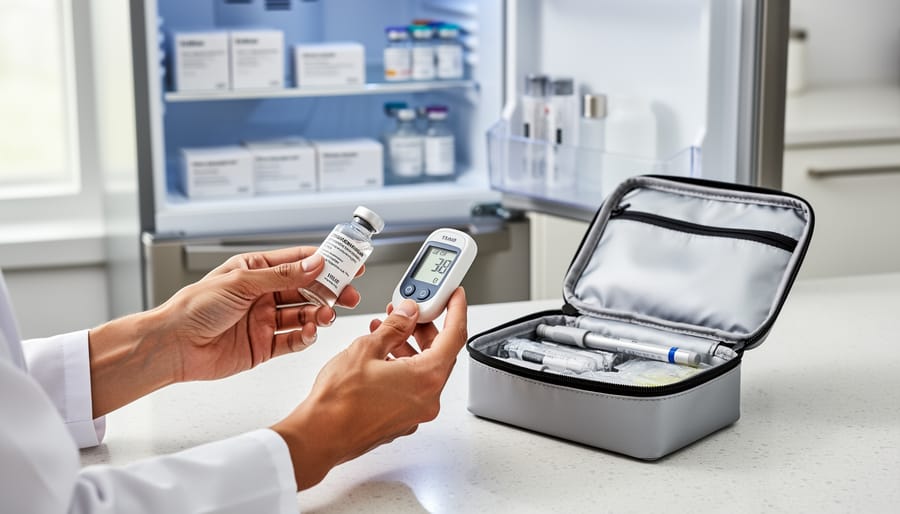
- Insulated travel case or cooling pouch for transporting insulin safely during daily commutes or trips
- Reusable cooling packs (not ice) to maintain stable temperatures without risking freezing
- Small storage container or basket to keep insulin organized and away from the freezer compartment
- Permanent marker and labels for marking opening dates on vials and pens
- Calendar or smartphone app for tracking when insulin needs to be discarded
The refrigerator thermometer is particularly important because your fridge’s built-in display may not be accurate, and even a few degrees can matter. Many people discover their fridge runs colder than expected, especially near the back wall where insulin might accidentally freeze.
For the insulated case, look for one specifically designed for medication rather than a standard lunch cooler. These cases maintain a more consistent temperature range and often include built-in thermometers. The 2026 models with smart temperature alerts are worth considering if you travel frequently or live in extremely hot climates.
Labels might seem unnecessary, but they’re your first line of defense against using insulin past its prime. Once you open insulin, the clock starts ticking, and relying on memory alone leads to costly mistakes.
Understanding Insulin Storage Safety
Insulin is a delicate medication that loses potency when exposed to temperatures outside its safe range. Unopened insulin must stay refrigerated between 36°F and 46°F, while in-use insulin can tolerate room temperature between 59°F and 86°F for limited periods. These boundaries matter because insulin is a protein that begins to break down when it gets too hot or too cold.
Freezing destroys insulin completely. If your insulin freezes, even briefly, the protein structure changes irreversibly and the medication becomes ineffective, you won’t be able to tell just by looking at it, but it simply won’t work to control your blood sugar. Similarly, temperatures above 86°F cause gradual degradation. Leaving insulin in a hot car, near a window in direct sunlight, or next to a heat source accelerates this breakdown.
You can often spot spoiled insulin through visual inspection. Clear insulins like rapid-acting and long-acting types should remain completely transparent with no cloudiness, particles, or color changes. If you see any clumps, crystals, or a yellowish tint, discard the vial or pen immediately. Cloudy insulins like NPH should look uniformly milky after gentle rolling, but watch for clumping, frosting on the inside of the vial, or particles that don’t mix in.
Using compromised insulin creates unpredictable blood sugar swings. You might inject your usual dose but see higher readings because the insulin has weakened, or you could experience unexpected lows if some portions retained potency while others didn’t. This inconsistency makes diabetes management frustrating and potentially dangerous. When in doubt about your insulin’s integrity, replace it and contact your healthcare provider to discuss any unusual blood sugar patterns you’ve noticed.
Step-by-Step: How to Store Unopened Insulin
Before you even open your insulin, proper storage starts the moment you bring it home from the pharmacy. Unopened insulin has a much longer shelf life than in-use insulin, but only if you store it correctly. The refrigerator becomes your insulin’s safe haven until you’re ready to start using it.
Your unopened insulin vials, pens, and cartridges should stay refrigerated at temperatures between 36°F and 46°F (2°C to 8°C). This range preserves the medication’s potency until the expiration date printed on the packaging. Keep your insulin in its original box or packaging, this protects it from light exposure and makes it easier to track expiration dates and lot numbers if needed.
Here’s how to set up proper refrigerator storage for your unopened insulin supply:
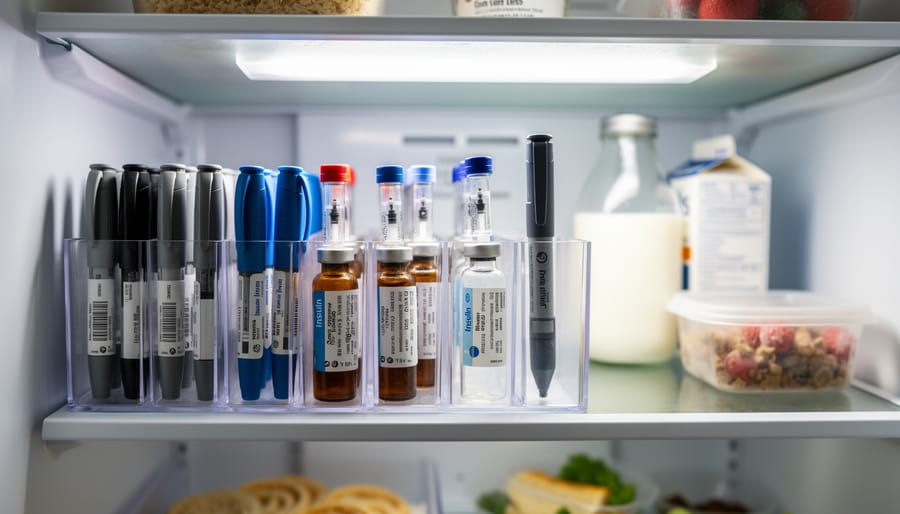
- Place unopened insulin toward the back of a middle or lower refrigerator shelf, where temperature stays most consistent
- Keep insulin away from the freezer compartment and any vents that blow cold air directly onto items
- Avoid storing insulin in the refrigerator door, where temperature fluctuates every time you open it
- Store insulin in a designated container or drawer section to prevent it from rolling around or getting knocked over
- Arrange boxes with the nearest expiration dates in front so you use older supplies first
- Write the date you received each insulin supply on the box to help with rotation
Never store insulin directly against the back wall of the refrigerator where it might freeze. Frozen insulin loses its effectiveness permanently, even after thawing. If you notice ice crystals or suspect your insulin has frozen, discard it and get a replacement.
Most unopened insulin remains effective until the expiration date on the package when stored properly. This typically gives you several months to a year, depending on when it was manufactured. Check those dates regularly and contact your pharmacy well before supplies expire to arrange refills.
Step-by-Step: How to Store Insulin After Opening
Once you open a vial or pen, insulin storage rules change significantly. Opened insulin can stay at room temperature, which makes daily injections more comfortable and reduces injection site reactions that cold insulin can cause.
Store your in-use insulin between 59°F and 86°F (15°C to 30°C). Keep it away from direct sunlight, heating vents, windowsills, and appliances that generate heat. A bedroom drawer, bathroom cabinet (if not humid), or kitchen cupboard away from the stove works well. Never put opened insulin back in the refrigerator, temperature fluctuations can affect its potency.
Transitioning and Tracking Your Opened Insulin
Follow these steps when you first open a new vial or pen:
- Remove the insulin from the refrigerator and let it reach room temperature naturally, this takes about 30 minutes. Never microwave or use hot water to speed this up.
- Write the opening date directly on the vial or pen using a permanent marker. Include both the month and day.
- Calculate the discard date based on your insulin type and mark it clearly. Most rapid-acting and long-acting insulins last 28 days, but some formulations differ.
- Store the insulin in a consistent location at room temperature where you’ll remember to check the date before each use.
- If using a pen, keep the cap on between injections to protect from light and contamination.
Duration limits vary by insulin type. Rapid-acting insulins like Humalog, Novolog, and Apidra typically last 28 days at room temperature. Lantus remains effective for 28 days, while Tresiba extends to 56 days after opening. Levemir lasts 42 days. Always check your specific insulin’s package insert, as manufacturers occasionally update recommendations.
Discard any opened insulin when you reach the expiration timeframe, even if liquid remains. Using insulin beyond its stability period risks unpredictable blood sugar levels. Also throw away any insulin exposed to temperatures above 86°F for more than an hour or that appears cloudy (when it should be clear), discolored, or contains particles.
Storing Insulin While Traveling
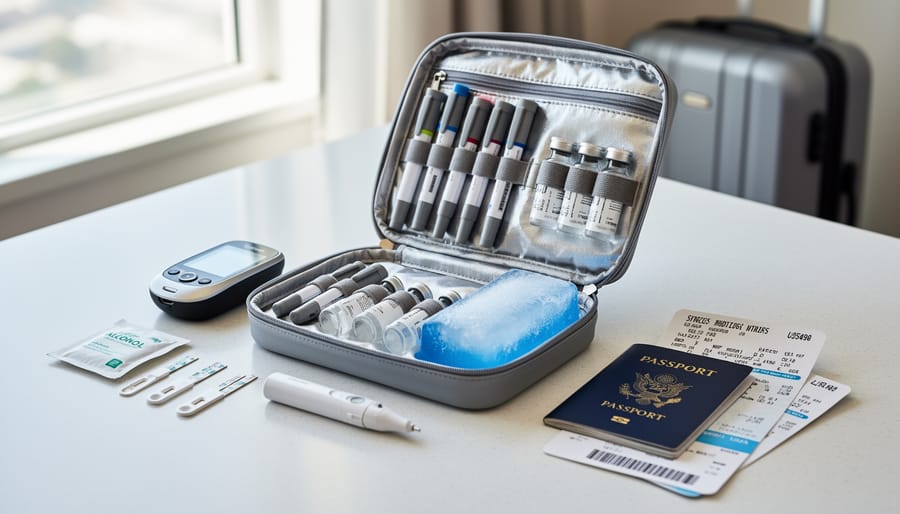
Traveling with insulin requires planning, but it’s entirely manageable once you understand a few key principles. The TSA allows insulin in carry-on bags without quantity restrictions, and you’re permitted to bring syringes, pens, and pump supplies through security. Always pack insulin in your carry-on rather than checked luggage, where temperatures fluctuate wildly and can freeze at high altitudes.
A quality insulated travel case is your best friend on the road. These cases maintain stable temperatures for hours without refrigeration, protecting your insulin from heat during flights, layovers, and sightseeing. Pair the case with reusable cooling packs specifically designed for insulin storage. These gel packs keep insulin cool without freezing it, unlike regular ice packs that can freeze your medication and ruin it completely. Activate the cooling packs according to package directions and place them in the case alongside your insulin, ensuring they don’t touch the vials or pens directly.
When you reach your hotel, store insulin in the room refrigerator if available, but check the temperature first since mini-fridges often run too cold. If there’s no fridge or you can’t verify the temperature, keep your insulin in its insulated case in the coolest part of the room, away from windows and heating vents. Your in-use insulin can safely stay at room temperature, so you don’t need refrigeration for the pen or vial you’re currently using.
Car storage deserves special attention because vehicles heat up dangerously fast:
– Never leave insulin in a parked car, even for short trips to the store
– Avoid the glove compartment, which becomes an oven in summer heat
– Keep insulin away from direct sunlight, including dashboard and window areas
– If traveling by car, store insulin in your insulated case rather than the trunk
Smart insulin cooling technology has advanced significantly in 2026, with portable cases now featuring built-in temperature monitoring and smartphone alerts. These devices track storage conditions continuously and notify you if temperatures drift outside safe ranges, giving you peace of mind whether you’re exploring a new city or sitting on a beach. Some systems even log temperature data, which can help you and your healthcare team troubleshoot any unexpected blood sugar patterns after travel.
How to Verify Your Insulin Is Still Good
Before you draw up or inject, take a moment to check your insulin. A quick inspection catches problems before they affect your blood sugar.
Start with the basics: clear insulins like rapid-acting (Humalog, Novolog) and long-acting (Lantus, Tresiba) should look like water. Hold the vial or pen up to light. You should see no particles, cloudiness, frost, or color changes. If your normally clear insulin looks milky, discolored, or has floating bits, discard it immediately.
NPH and pre-mixed insulins naturally appear cloudy because they contain suspended particles. Before checking these, roll the vial gently between your palms or tip the pen back and forth slowly ten times. The insulin should turn uniformly white or milky with no clumps. Never shake insulin vigorously, this damages the protein structure. After gentle mixing, look for chunks, crystals, or separation that does not blend evenly. These signs mean the insulin has degraded.
Check the label date you marked when you opened it. Most insulins expire 28 days after opening, though some like Lantus last 42 days at room temperature. When in doubt, your insulin’s package insert lists the specific duration.
If you suspect your insulin sat in a hot car, got frozen, or looks off in any way, do not use it. Contact your healthcare provider or pharmacist right away for guidance. They would rather help you assess a questionable vial than have you deal with unexplained high blood sugars from ineffective insulin.
Common Insulin Storage Mistakes and How to Avoid Them
Even experienced insulin users can slip into storage habits that compromise their medication. Recognizing these common mistakes helps you protect your insulin investment and maintain reliable blood sugar control.
Bathroom storage tops the list of frequent errors. The humidity from showers and temperature fluctuations make bathrooms one of the worst places for insulin, even though many people store medications there out of habit. Keep your insulin in a bedroom drawer, kitchen cabinet away from the stove, or another consistently cool, dry spot instead.
Leaving insulin in cars ranks as another major mistake, especially during summer months. A closed car can reach 130°F or higher within minutes on a warm day, destroying your insulin long before you notice. If you must bring insulin in your car, carry it with you in an insulated case rather than leaving it in the vehicle, even “just for a few minutes.”
Using insulin past its expiration date happens more often than it should. Once you open a vial or pen, that 28-day clock starts ticking regardless of the printed expiration date. Write the opening date directly on the insulin container with a permanent marker, and set a phone reminder for 28 days out so you know exactly when to switch to a fresh supply.
Re-refrigerating room-temperature insulin seems logical but actually causes problems. The temperature cycling can affect insulin stability, and condensation from moving between temperatures may introduce moisture. Once you’ve started using insulin at room temperature, keep it there for its full 28-day lifespan.
Storing insulin in refrigerator doors exposes it to the most temperature variation in your fridge. Every time you open the door, that insulin experiences a temperature swing. Place it on a middle shelf toward the back where temperatures stay most stable, but not so far back that it risks freezing against the rear wall.
Sarah, a type 1 diabetic for fifteen years, struggled with unexplained blood sugar spikes until her endocrinologist asked about her insulin storage. She’d been keeping opened pens in her purse for months, using insulin well past the 28-day mark, and had no idea this mattered. After implementing a simple labeling system and discarding insulin at 28 days, her A1C dropped from 8.2% to 7.1% within three months, same insulin, same doses, just properly stored.
Frequently Asked Questions About Insulin Storage
Can I refreeze insulin that got too cold?
No, never use insulin that has frozen. Freezing breaks down insulin’s molecular structure permanently, making it ineffective even after thawing. Discard any insulin exposed to temperatures below 36°F and start a new supply.
What should I do if my power goes out?
Keep your refrigerator door closed, most refrigerators stay cold enough for 4-6 hours without power. If the outage lasts longer, move unopened insulin to a cooler with ice packs (never direct ice contact). In-use insulin at room temperature is fine for its normal 28-day window.
How can I tell if my insulin accidentally froze?
Check for ice crystals, unusual clumping after gentle rolling, or a grainy texture. If you’re unsure whether insulin reached freezing temperatures, it’s safer to replace it than risk ineffective doses.
Can I store different types of insulin together in the refrigerator?
Yes, you can store multiple insulin types in the same refrigerator area as long as each is clearly labeled and in its original packaging. Just keep them organized to prevent mix-ups during your daily routine.
Do insulin pump reservoirs need special storage?
Filled pump reservoirs should stay attached to your body at normal body temperature. Don’t refrigerate a filled reservoir or pump. Empty reservoirs can be stored at room temperature until you’re ready to fill them.
Is it okay to leave insulin in my car for a quick errand?
Even a “quick trip” is risky. Car interiors reach dangerous temperatures within 10-15 minutes on warm days, and insulin loses potency fast above 86°F. Always take your insulin with you.
These questions come up repeatedly because insulin storage involves real-world situations that don’t always go as planned. The key theme across all these scenarios is that when you’re uncertain about whether your insulin stayed within safe temperature ranges, replacing it is the responsible choice. Your blood sugar stability depends on insulin that works predictably, and spoiled insulin can lead to unexplained highs that are frustrating to troubleshoot.
One practical tip: keep a small notebook or use your phone to track any storage incidents, power outages, travel delays, or times you questioned whether insulin got too warm. Share this log with your healthcare team if you notice blood sugar patterns that don’t make sense. They can help you determine whether storage issues might be contributing and adjust your supply accordingly.
Proper insulin storage isn’t complicated, but it makes a real difference in how well your medication works. By keeping unopened insulin refrigerated, storing in-use vials or pens at room temperature, and protecting your supply from extreme heat or freezing, you’re safeguarding both your health and your wallet.
Take a moment today to check your current storage setup. Is your refrigerator thermometer showing the right range? Have you marked opening dates on your pens? Are you carrying insulin safely when you leave home? Small adjustments now prevent bigger problems later.
The good news is that managing insulin storage keeps getting easier. Smart insulin pens with built-in temperature monitoring are becoming more common in 2026, taking the guesswork out of whether your insulin stayed within safe limits. These devices alert you to temperature excursions and track storage duration automatically.
Your insulin is precious medication that deserves simple daily care. Store it right, check it regularly, and you’ll maintain the effectiveness you need for stable blood sugar control. You’ve got this.