
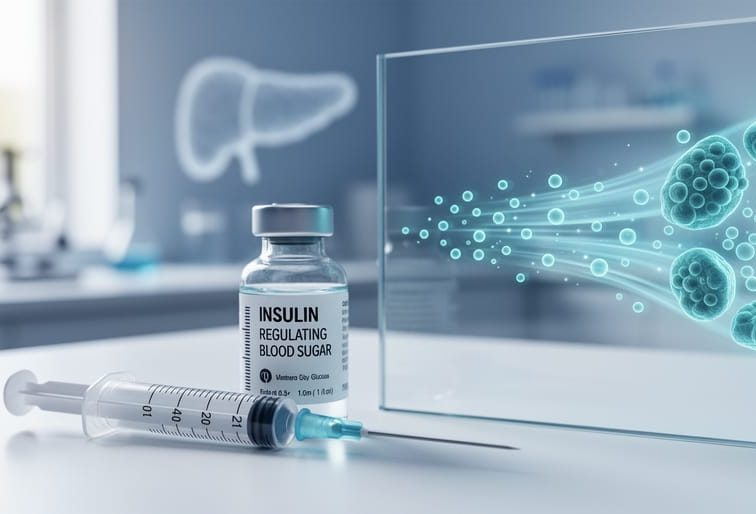

Insulin is a hormone made by the pancreas that lets your body use glucose, the sugar from food, for energy. It does three main jobs: it moves glucose out of the bloodstream and into your cells, it stores extra glucose in the liver and muscles for later, and it signals the body to stop releasing stored glucose when blood sugar is already in range. Together, those actions keep blood sugar steady between meals and after them.
Understanding these three functions makes diabetes easier to talk about, whether you’re newly diagnosed, caring for someone you love, or brushing up as a professional. In type 1 diabetes, the pancreas makes little or no insulin. In type 2, the body doesn’t respond to insulin as well as it should, and over time may not make enough. Either way, one or more of these jobs isn’t getting done, which is why blood sugar rises.
This article explains each function in plain language, shows how it connects to the two main types of diabetes, and covers how insulin therapy and monitoring technology support the work your body can’t do on its own. If you have your own experience with insulin to share, we’d love to hear it in the community.
What Insulin Is and Why It Matters
Insulin is a hormone, a chemical messenger your body makes to help manage the sugar from the food you eat. It’s made in the pancreas, a small organ tucked behind your stomach. Inside the pancreas, specialized cells called beta cells sit ready to release insulin whenever your blood sugar rises. Researchers describe how beta cells secrete insulin in response to the glucose in your blood.
Think of glucose as your body’s fuel. Your muscles, brain, and organs all run on it. But glucose can’t simply wander into cells on its own. Insulin acts like a key that unlocks the door, letting glucose move out of the bloodstream and into the cells that need it.
Here are a few terms in everyday language:
- Insulin
- A hormone that helps your cells take in and use glucose for energy.
- Glucose
- The simple sugar your body gets from food and uses as its main fuel.
- Pancreas
- The organ behind your stomach that makes insulin and other digestive helpers.
- Beta cells
- The special pancreas cells that produce and release insulin.
- Blood sugar
- The amount of glucose circulating in your blood at any moment.
When this system runs smoothly, you rarely notice it. In diabetes, though, the key is missing or doesn’t fit the lock as well as it should. That’s why understanding the role of insulin is such a helpful first step in managing the condition.
How Insulin Works Inside the Body

When you eat, your body gets to work right away. Carbohydrates in your food are broken down into glucose, a simple sugar that enters your bloodstream. That’s why blood sugar naturally rises after a meal. It’s a normal part of digestion, not a sign that something is wrong.
Here’s the usual sequence in a body that makes and uses insulin well:
- Food is digested and carbohydrates break down into glucose.
- Glucose enters the blood, so blood sugar goes up.
- The pancreas senses the rise and releases insulin.
- Insulin signals cells in the muscles, fat, and liver to take in glucose.
- Glucose moves out of the blood, and blood sugar settles back into a healthy range.
Think of insulin as a messenger. It travels through the blood and knocks on the door of your cells, telling them it’s time to let glucose in. Once the cells have taken in what they need, the amount of sugar left in your blood drops. This is how insulin helps lower blood sugar after you eat.
The pancreas keeps adjusting all day long, releasing a little insulin between meals and more when blood sugar climbs. When this system runs smoothly, you don’t feel any of it happening. For people with diabetes, one or more steps in this chain may not work as expected, which is exactly why understanding the process can make managing it feel clearer and more doable.
The 3 Functions of Insulin

Function 1: Moving Glucose Out of the Blood and Into Cells
After you eat, your digestive system breaks food down into glucose, and that glucose enters your bloodstream. This is where insulin steps in for its first and most familiar job: helping glucose leave the blood and move into your cells.
Think of insulin as a key. Cells have tiny locks on their surface, and when insulin fits into them, it signals the cell to open a pathway for glucose. Muscle cells, fat cells, and liver cells all respond this way. Once inside, glucose can be used right away for energy, whether that’s powering a walk, a workout, or simply keeping your body running.
This is also why blood sugar comes back down after a meal. As glucose moves out of the bloodstream and into cells, the amount circulating in your blood drops, returning toward a healthy range.
When this step doesn’t work well, glucose lingers in the blood instead of reaching the cells that need it. That’s the core reason blood sugar runs high in diabetes, and why the cells can be short on fuel even when there’s plenty of sugar around.
Understanding this function makes it easier to see why insulin therapy, food choices, and activity all matter. Each one affects how smoothly glucose gets from your bloodstream to your cells.
Function 2: Storing Extra Energy for Later
After you eat, your body doesn’t need all the glucose right away. Insulin’s second job is to help tuck the extra away so you have fuel later.
In the liver and muscles, insulin signals cells to link glucose molecules together into a storage form called glycogen. Think of glycogen as a small energy savings account. Your liver keeps some of it to share with the rest of your body, and your muscles hold some for their own use during activity.
Between meals, overnight, or during a long stretch without food, the body can draw on those glycogen stores to keep energy available. That steady supply is a big reason you can feel fine even when you haven’t eaten for hours.
Glycogen storage space is limited, though. When the liver and muscles are full and there’s still extra glucose around, insulin helps the body convert it into fat and store it in fat cells. This is a normal, natural process, not a sign that anything has gone wrong. Fat is simply the body’s longer-term energy reserve.
For people with diabetes, this function can be disrupted. If there isn’t enough insulin, or the body doesn’t respond to it well, less glucose gets stored away, and more stays in the bloodstream.
Function 3: Keeping the Liver From Releasing Too Much Sugar
Between meals and overnight, you aren’t eating, yet your brain and body still need a steady supply of fuel. The liver helps by keeping a reserve of glucose and releasing some into the blood when needed. Insulin acts like a dimmer switch on that process.
When insulin levels are present, they signal the liver to slow down its own sugar production and to stop breaking down stored glycogen so quickly. In practical terms, the liver gets the message: “There’s enough sugar in the blood right now, so hold back.” This keeps blood sugar from drifting too high when no food is coming in.
Think about a long stretch without eating, like a night’s sleep. The pancreas keeps releasing small, steady amounts of insulin in the background, and that gentle signal helps the liver release just the right amount of glucose, not too much and not too little.
When this signal is weak or missing, the liver can keep sending out sugar even when blood sugar is already high. That’s one reason fasting readings, such as those first thing in the morning, can run higher in people with diabetes. It isn’t a sign anyone did something wrong. It simply shows what happens when this third function isn’t getting the support it needs.
Understanding all three jobs gives you a clearer picture of why insulin matters so much in everyday blood sugar management.
When Insulin Doesn’t Work as Expected: Type 1 and Type 2 Diabetes
Insulin works best when the pancreas makes enough of it and the body’s cells respond well. In diabetes, one or both of those things change, which can disrupt the three functions we just covered.
In type 1 diabetes, the immune system damages the beta cells in the pancreas, so the body makes little or no insulin. Without it, glucose has a hard time moving out of the blood and into cells, which is the first function. The body also can’t store extra energy as easily, and the liver doesn’t get the signal to slow its sugar release. Blood sugar can climb because glucose stays in the bloodstream while the liver keeps adding more. That’s why people with type 1 diabetes need to take insulin to replace what the body no longer makes.
Type 2 diabetes works a little differently. Here, the body still makes insulin, but cells don’t respond to it as well. This is called insulin resistance. The pancreas may compensate by making more insulin for a while, but over time it can struggle to keep up and may produce less. If you’d like a closer look at how this plays out, this guide to insulin in type 2 explains the body’s response in more detail.
Both types can affect all three functions, just in different ways and at different paces. Neither is a personal failing. Genetics, the immune system, age, and many other factors play a role. Understanding what’s happening in your body is a helpful first step, and your care team can help you find an approach that fits your situation.
How Insulin Is Used in Diabetes Care Today

For many people with diabetes, insulin therapy is how the three functions we’ve covered get supported from the outside. In type 1 diabetes, insulin replaces what the pancreas no longer makes. In type 2, it may supplement the body’s own supply when it can’t keep up. Either way, the goal is the same: help glucose move into cells, support storage, and keep the liver from releasing too much sugar.
There are several common ways to deliver insulin and keep an eye on how it’s working:
- Syringes: A needle and vial let you draw up an exact dose and inject it under the skin.
- Insulin pumps: A small wearable device that delivers insulin steadily through a thin tube or patch, with extra doses at mealtimes.
- Insulin pens: A pre-filled or cartridge-based device that many people find compact and easy to dial and use.
- Continuous glucose monitors (CGMs): A small sensor that tracks glucose throughout the day and night, so you can see trends rather than single readings.
Seeing those trends can be eye-opening. A CGM shows how a meal, a walk, or a stressful afternoon nudges your blood sugar up or down, which makes it easier to understand how insulin and food work together. If you’re curious about that side of things, our guide on diet and diabetes is a helpful next read.
Technology in this area keeps evolving, and no single option is right for everyone. The best fit depends on your daily routine, comfort, goals, and type of diabetes. Your care team can walk you through the choices and help you adjust as your needs change.
A few practical habits make any method work better, including knowing how to store insulin safely so it stays effective.
If you’re comfortable sharing, we’d love to hear what has worked for you in our community. Your experience might be exactly what someone else needs to hear.
Common Questions About Insulin’s Role
A lot of people have the same worries about insulin, so let’s take them one at a time.
Does everyone with diabetes need insulin?
No. Everyone with type 1 diabetes needs insulin, because the body makes little or none. Many people with type 2 manage with food choices, movement, or other medications, though some use insulin now or later, depending on their needs.
Does needing insulin mean I did something wrong?
Not at all. Diabetes is shaped by genetics, hormones, and how the body changes over time, and needing insulin is simply a way of giving your body what it needs to do its job. It’s not a failure or a judgment on your effort.
How is insulin different from other diabetes medications?
Insulin is the hormone itself, replacing or supplementing what your body makes. Many other medications work differently, such as helping your body respond to its own insulin better or slowing how quickly sugar enters the blood.
Will starting insulin be complicated?
It can feel like a lot at first, but most people find it becomes routine with support and practice. Your care team can walk you through the options and help you find what fits your life.
These answers are general, and every person’s situation is different. Your healthcare provider can give you advice tailored to your body, your type of diabetes, and your goals. If a question comes to mind that isn’t covered here, write it down and bring it to your next appointment.
Insulin does three jobs that work together: it moves glucose out of the blood and into your cells, it helps store extra energy for later, and it tells the liver to hold back on releasing sugar. When one or more of these jobs isn’t working as it should, as in type 1 or type 2 diabetes, that’s where insulin therapy and other treatments step in to help.
Understanding how insulin works isn’t just a science lesson. It’s a practical tool. When you know why your blood sugar rises after a meal, or why it can drift overnight, the numbers on your meter or monitor start to make more sense, and the choices you make with your care team feel more grounded.
You don’t have to figure this out alone. Lean on your healthcare providers for guidance that fits your situation, and consider connecting with others who understand the day-to-day reality of diabetes. When you’re ready, explore more resources on our site to keep building your knowledge, one clear step at a time.